Emerging Tech Strategy: Championing Conversational UX & Claims Deflection for AIG at CES 2018
Executive Summary
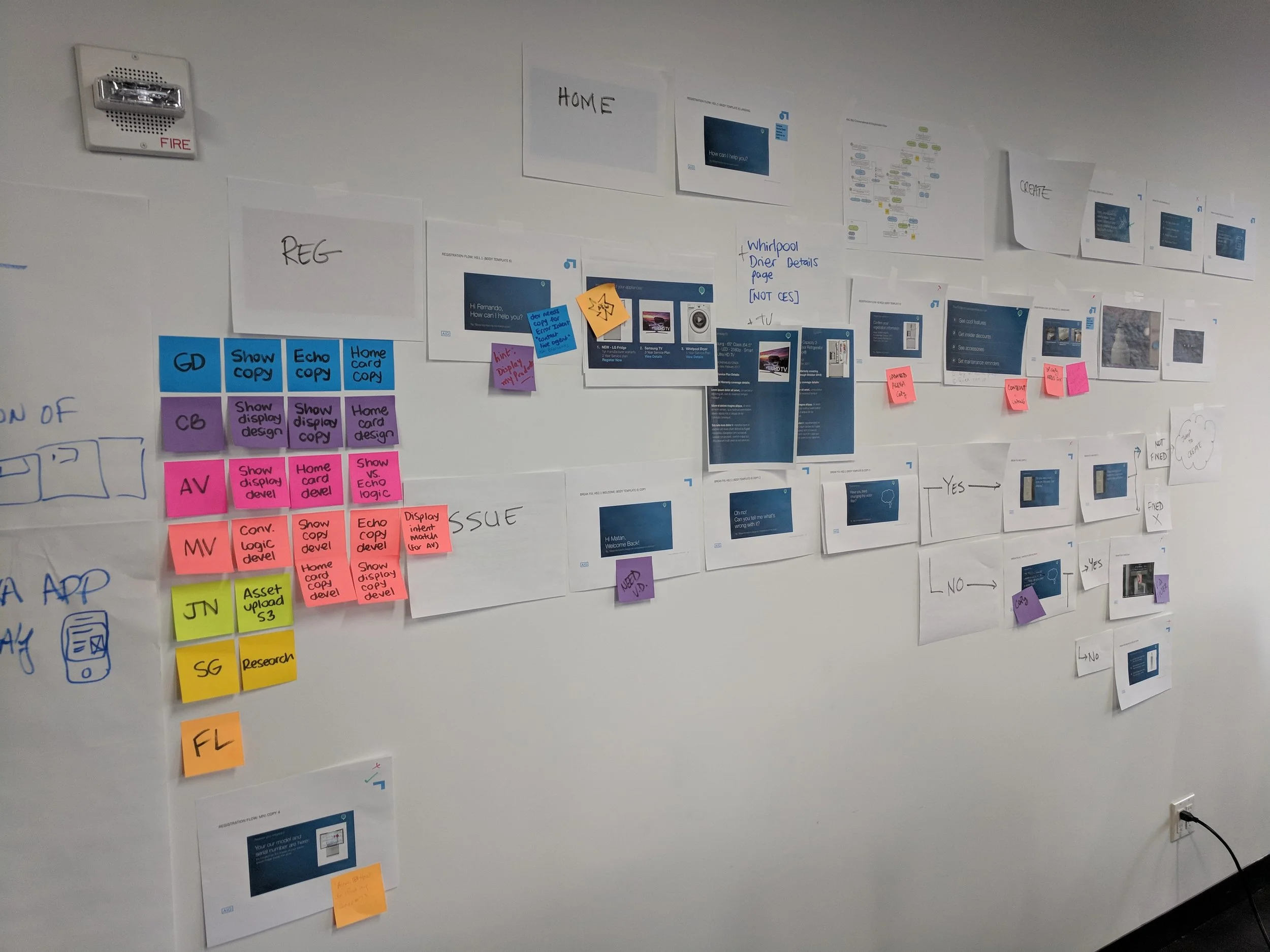
Embedded as a senior strategic design consultant within an exclusive, high-velocity corporate innovation unit at AIG. The mandate was to pioneer new horizons in risk management by leveraging emerging technologies—specifically Conversational Voice UX and Mobile Augmented Reality (AR)—to architect a proactive first line of defense against household insurance claims. The resulting ecosystem, debuted live by AIG executive leadership at the 2018 Consumer Electronics Show (CES) in Las Vegas, successfully demonstrated how interactive, multi-modal design can actively deflect high-volume property claims before they materialize.
The Challenge: Proactive Deflection in a Reactive Industry
The insurance industry is traditionally entirely reactive—processing financial losses after damage has already occurred. Re-engineering this paradigm using unproven consumer hardware introduced severe structural challenges:
Navigating Deep Ambiguity: The innovation unit was launched inside an isolated accelerator footprint with a completely open-ended brief: figure out how to leverage voice-driven consumer AI platforms (Amazon Alexa) to alter homeowner behavior.
The Multi-Modal Friction Point: Merging independent systems—translating abstract audio voice scripts into real-time, overlayed mobile Augmented Reality (AR) visual instructions—required a completely new user experience framework.
High-Stakes Deadline Governance: Operating under an absolute, immovable corporate deadline to deliver a bulletproof, executive-vetted deployment ready for international press exposure on the main stage at CES 2018.
The Strategy: Rapid Prototyping, Voice Architecture, & Multi-Modal Design
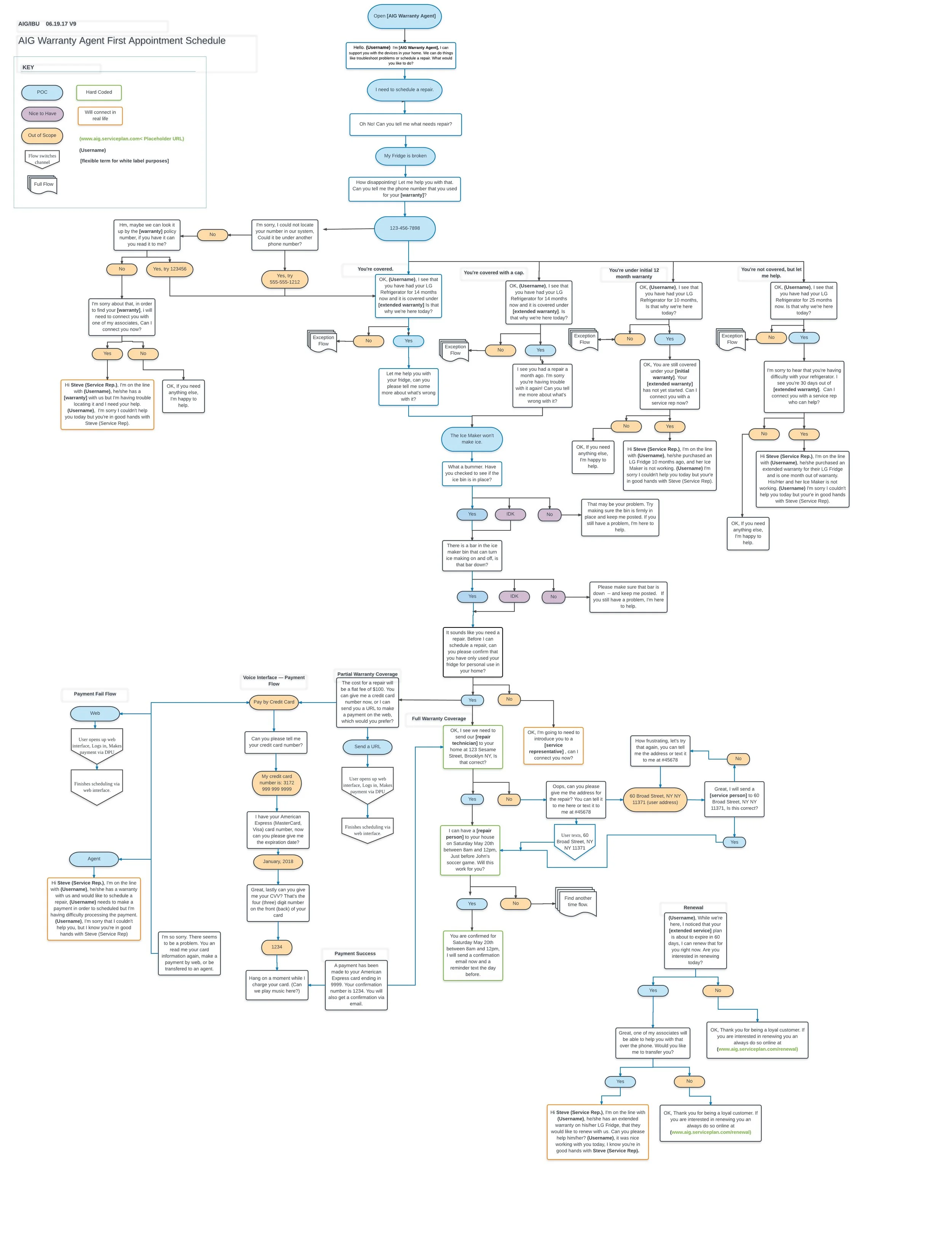
Overcoming the technical friction required establishing a localized, rapid-iteration prototyping model, mapping deep conversational dialogue trees, and bridging the gap between physical appliances and spatial computing.
Conversational UX Architecture & Dialogue Mapping
I mapped out and designed the early conversational scripts and decision trees governing the voice interface. Instead of relying on traditional screen layouts, the core architecture focused entirely on spatial audio flow, ensuring the Alexa assistant could dynamically diagnose a user's household appliance crisis using natural, intuitive language logic.
Spatial Computing & Mobile AR Integration
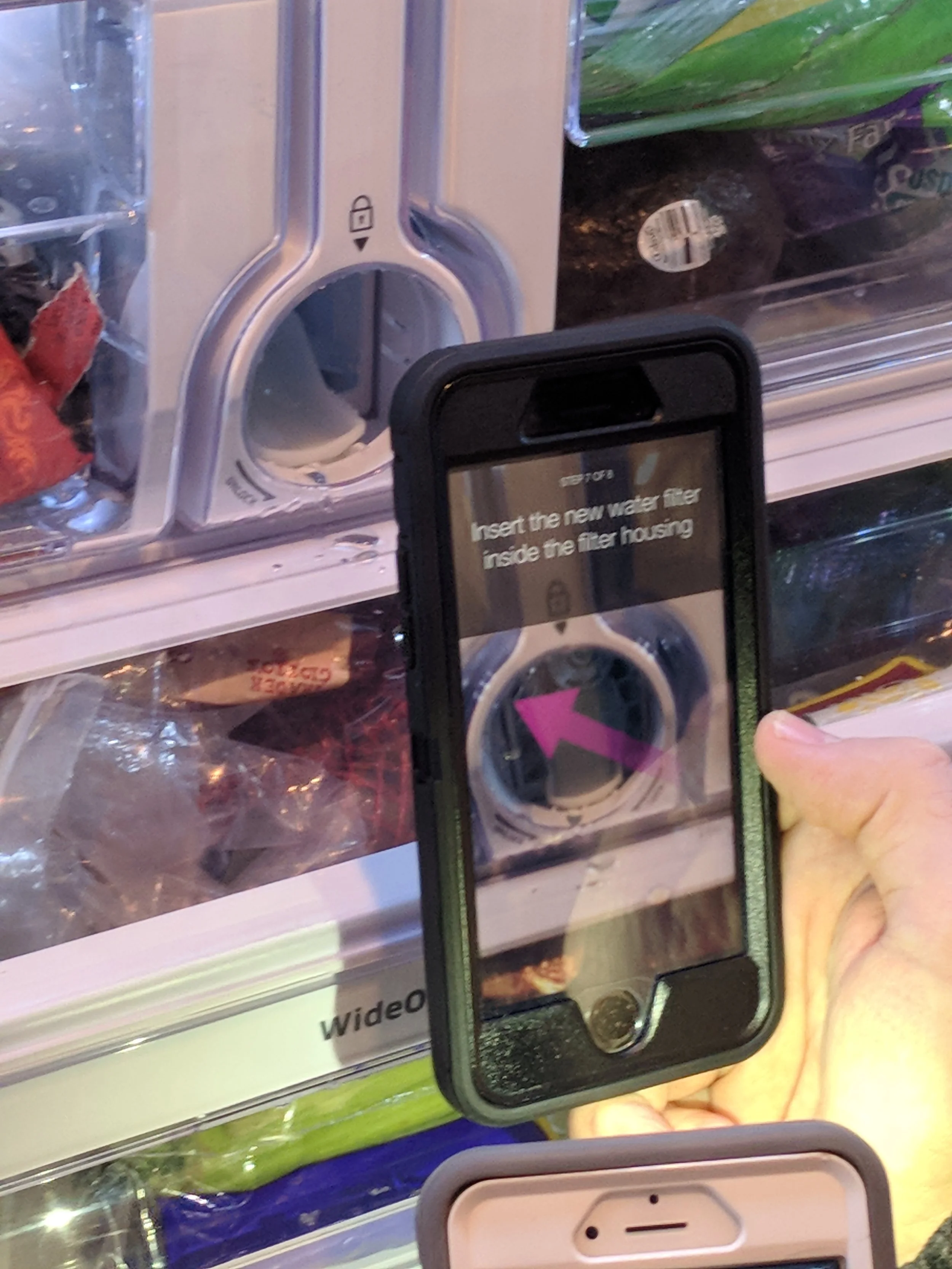
To anchor the voice guidance with physical execution, our unit designed a companion mobile Augmented Reality (AR) layer. When a user interacted with the system, the companion interface overlayed hyper-precise visual cues onto their actual environment, guiding them step-by-step through high-risk maintenance tasks—such as replacing internal refrigerator water filters—effectively neutralizing the root cause of common internal flooding claims.
High-Velocity Innovation Sprints
Operating out of an agile, siloed research workspace, I facilitated continuous cross-functional alignment loops between machine learning engineering pipelines and AIG product sponsors, compressing an enterprise-grade R&D lifecycle down into a multi-week delivery window.
The Impact & Global Stage Validation
Global Stage Exposure: The final multi-modal experience was successfully deployed and presented live by AIG's executive tier at CES 2018 in Las Vegas, positioning the corporation as an elite pioneer in digital-first risk mitigation.
Proven Value of Proactive Deflection: Provided the enterprise with an entirely new product blueprint, proving that UX can serve as an active financial lever to reduce insurance claims payouts through preventative user experiences.
Multi-Modal Requirements Baseline: Established an early corporate requirement framework for multi-modal user journeys, combining voice interface parameters with mobile spatial computer tracking.